
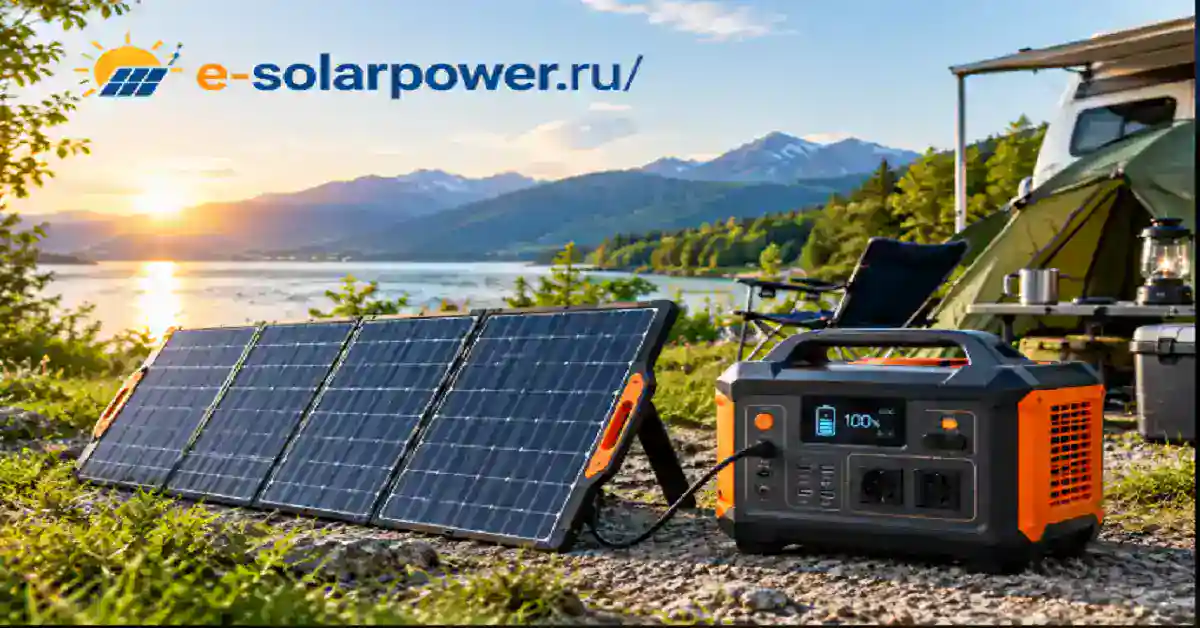
Reliable electricity is important when travelling, spending time outdoors, working away from conventional power sources, or preparing for unexpected interruptions at home. Portable power stations offer a practical way to store electricity and supply power to compatible electronic devices without running a conventional fuel-powered generator. When paired with a compatible solar panel, they can also recharge using sunlight, making them useful for outdoor activities and off-grid situations.
E-Solarpower.ru features portable power stations, folding solar panels, and other portable solar equipment. Its product range includes different power capacities and battery types, allowing buyers to compare options according to their electricity requirements. Understanding how these systems work, how solar charging affects performance, and which specifications matter most can help users choose equipment that fits their needs.
Understanding Portable Power Stations and Their Purpose
What Is a Portable Power Station?
A portable power station is a rechargeable battery system designed to supply electricity to compatible devices. Depending on its model, it may include USB connections, DC outputs, AC outlets, a built-in inverter, and a display showing battery and power information.
Unlike a conventional petrol or diesel generator, a battery power station does not need to burn fuel while supplying stored electricity. Its operating time depends on the battery capacity, the amount of power being consumed, and the conditions under which it is charged.
How Portable Power Stations Support Everyday Activities
Portable power stations can supply electricity to smartphones, laptops, cameras, lights, portable refrigerators, and other compatible equipment. Larger models may support additional appliances, provided their continuous output rating, surge capacity, voltage, and connection requirements are suitable.
Their portability makes them useful for people who need electricity in locations where standard wall outlets are unavailable. However, a compact station is not automatically suitable for every appliance, so checking the device’s power requirements remains essential.
The Difference Between a Battery Station and a Fuel Generator
Both portable power stations and fuel-powered generators can provide electricity, but they operate differently. A fuel generator produces electricity by burning fuel, while a portable power station delivers energy stored in its battery.
A solar-compatible power station can be recharged through a suitable solar panel, reducing its dependence on electricity from a wall outlet. This makes it particularly useful for outdoor activities and situations where access to conventional electricity is limited.
How Solar Energy Recharges a Portable Power Station
Solar Panels Convert Sunlight Into Electricity
Solar panels contain photovoltaic cells that convert sunlight into electrical energy. When sunlight reaches the cells, the panel produces DC electricity, which can be used to charge a compatible power station through its designated solar input.
The amount of electricity generated depends on the panel’s rated wattage, sunlight intensity, panel orientation, shading, temperature, and other environmental conditions. A panel rated at 200 watts, for example, does not necessarily produce 200 watts throughout the day.
The Charge Controller Regulates Incoming Power
Many portable power stations include a solar charge controller that manages the electricity received from connected panels. Some models use maximum power point tracking, commonly called MPPT, to help obtain useful power from a solar panel as sunlight and operating conditions change.
The supported voltage and current ranges are important. A solar panel must operate within the station’s permitted input specifications, and the connection must follow the manufacturer’s instructions.
Stored Electricity Powers Connected Devices
Once solar energy has charged the battery, the station can supply electricity to compatible devices when needed. Users can charge their electronics directly through supported DC or USB outputs, while AC-powered appliances can be connected to an appropriate inverter-equipped model.
This arrangement separates the time when electricity is collected from the time when it is used. A station can therefore collect solar energy during daylight and provide stored power later, subject to its remaining charge and the connected devices’ consumption.
Choosing the Right Portable Power Station and Solar Panel
Start With Battery Capacity
Battery capacity, commonly expressed in watt-hours (Wh), indicates how much energy a power station can store. A larger capacity generally allows more energy to be supplied before recharging, although actual operating time also depends on conversion losses and the power consumed by connected devices.
A small station may be sufficient for phones, cameras, and modest electronic equipment. Running a portable refrigerator or several appliances for extended periods may require a larger battery and a suitable output rating.
Check the Power Output and Solar Input
Output power, measured in watts (W), indicates how much power a station can supply within its operating limits. Buyers should check both the continuous output and any stated peak or surge rating when selecting equipment for appliances that draw additional power during startup.
Solar input is a separate specification. Even if a station can supply substantial output power, its solar charging input may accept considerably less power. The solar panel’s voltage, current, connector, and rated wattage must all be compatible with the station.
Compare Relevant Specifications Before Buying
E-Solarpower.ru lists different portable power stations and folding solar panels, making specifications useful for comparing equipment before purchase.
| Specification | What it means | Why it matters |
|---|---|---|
| Battery capacity (Wh) | Energy the battery can store | Helps estimate potential operating time |
| Output power (W) | Power supplied to connected devices | Determines which appliances the station can support |
| Solar input rating (W) | Maximum supported solar charging power | Helps determine suitable panel capacity |
| Input voltage range | Permitted voltage from a charging source | Helps ensure electrical compatibility |
| Charge controller | System that manages incoming solar power | Supports suitable and controlled charging |
| Weight and dimensions | Physical size of the equipment | Matter for transport, camping, and storage |
| Battery chemistry | Type of battery used | Helps buyers compare product characteristics and specifications |
Comparing these details is more useful than choosing a model based only on its advertised wattage or appearance.
Selecting Solar Panels for Portable Energy Systems
Understand the Available Panel Sizes
Folding solar panels are useful when portability matters because they can be packed away when not in use. E-Solarpower.ru’s portable solar equipment catalogue includes panels with listed ratings such as 60 W, 100 W, 120 W, and 200 W.
These ratings provide a starting point for comparing potential charging setups. A smaller panel may suit limited charging needs, while a higher-wattage compatible panel can offer more charging capacity under suitable sunlight conditions.
Match the Panel to the Station
A higher-wattage solar panel is not automatically the best choice for every power station. The station’s maximum solar input, accepted voltage range, current limits, and connector type must be checked first.
A panel that exceeds the supported voltage can be unsuitable even when its wattage appears appropriate. Where multiple panels are connected, their arrangement must also remain within the manufacturer’s permitted input limits.
Consider the Conditions in Which You Will Charge
Sunlight conditions influence the electricity produced by solar panels. Shade, clouds, incorrect positioning, and changes in sunlight intensity can reduce actual output compared with the panel’s rated capacity.
Before choosing equipment, consider where it will be used, how often it will be transported, and whether the panel can be positioned in direct sunlight. A practical system should suit both the power requirements and the environment in which charging will take place.
Practical Uses of Solar-Charged Portable Power Stations
Camping and Outdoor Activities
Camping often involves spending time away from fixed electrical outlets. A portable power station can supply electricity for phones, rechargeable lights, cameras, and other compatible equipment, while a solar panel provides a way to replenish the battery when sunlight is available.
The correct setup depends on how much electricity the equipment consumes and how long it must operate. Users should calculate their needs before travelling rather than assume that a portable station will support every appliance throughout an entire trip.
Backup Electricity at Home
A portable power station can provide temporary power during an interruption in the usual electricity supply. Depending on its capacity and output, it may support communication devices, lighting, laptops, and selected small appliances.
A solar panel can help recharge the battery when suitable sunlight is available. However, the amount of power collected and the time required for charging depend on the equipment and environmental conditions. A portable station should not be treated as an unlimited source of household electricity.
Remote Work and Mobile Equipment
People working outside conventional offices may need reliable electricity for laptops, cameras, communication equipment, and other electronic devices. A portable power station can supply stored electricity without requiring a nearby wall outlet.
For fieldwork, travel, or temporary workspaces, the most useful arrangement is one that balances battery capacity, charging options, output connections, and portability. Keeping track of energy consumption can also help users plan when to recharge the station.
Getting Better Performance From Solar Charging
Position the Panel for Suitable Sunlight
Solar panels generally perform better when they receive strong, direct sunlight without avoidable shading. The best orientation depends on the location, time of day, and season.
When the panel can be repositioned safely, adjusting its angle toward the sun may help improve the available charging power. Users should also follow the manufacturer’s guidance for outdoor placement and weather exposure.
Monitor Battery Levels and Energy Consumption
Checking the station’s display can help users understand the remaining battery charge and incoming or outgoing power, where these readings are available. This information makes it easier to estimate whether the stored electricity will meet the remaining needs of the day.
Several habits can help maintain a more predictable charging routine:
- Check the station’s maximum solar input before connecting a panel.
- Use the supported cable and connector specified by the manufacturer.
- Keep the panel free from avoidable shading and dirt.
- Monitor battery levels during charging and use.
- Reduce unnecessary power consumption when energy is limited.
- Follow the product instructions for temperature, storage, and weather exposure.
These practices do not guarantee a particular charging speed, but they help users operate their equipment according to its intended specifications.
Understand Why Charging Time Varies
Charging time depends on the station’s battery capacity, its current state of charge, the panel’s actual output, and the power accepted by the charging input. For this reason, a simple calculation based on the battery’s watt-hours and the panel’s rated wattage can only provide an idealized estimate.
For example, a 500 Wh battery connected to a solar panel producing a sustained 100 W would theoretically need five hours to receive 500 Wh of energy. In actual use, charging can take longer because solar output changes and the system has conversion losses.
The example illustrates why rated panel output should not be confused with guaranteed charging performance. Local sunlight and the station’s input limits determine how closely actual conditions approach the theoretical estimate.
7. Important Safety and Maintenance Considerations
Follow Electrical Compatibility Requirements
Solar charging equipment should be connected according to the station’s specifications. Voltage, current, polarity, connector type, and supported solar input range all matter when selecting compatible components.
Using an unsuitable panel or an incorrect connection can damage equipment or create electrical hazards. If the specifications are unclear, users should consult the manufacturer or a qualified supplier before connecting the system.
Protect the Battery and Charging Equipment
Battery care depends on the chemistry and design of the particular power station. Users should follow the recommended operating and storage temperatures, use approved charging methods, and avoid physical damage to the battery or charging connections.
Weather resistance also varies among models. A product should not be assumed to be waterproof or suitable for continuous outdoor exposure simply because it is described as portable. Check the stated protection rating and operating instructions before using the equipment outside.
Plan for Changing Energy Requirements
Energy needs can change when additional devices are connected or when appliances operate longer than expected. Periodically reviewing which devices are essential helps users manage the available charge more effectively.
Before relying on a station for an important task, confirm that its battery capacity, output rating, and charging options are suitable for the intended use. For critical equipment, a backup plan may also be necessary when sunlight is unavailable.
Conclusion: Building a Practical Solar Charging Setup
Match Equipment to Real Requirements
The most useful portable power setup begins with a clear understanding of which devices need electricity and how long they must operate. Battery capacity determines how much energy can be stored, while output power and connection requirements determine which devices can be supported.
Solar panel selection requires equal care. Panel wattage, voltage, current, and the power station’s supported charging input should all be considered together.
Make Solar Charging Part of an Energy Plan
A solar-compatible power station can provide useful flexibility for outdoor activities, mobile work, and selected home backup needs. Its practical value depends on suitable equipment, available sunlight, battery capacity, and responsible energy management.
Understanding these factors helps users establish realistic expectations instead of assuming that solar charging will always supply power at the same rate.
Explore Suitable Portable Solar Equipment
E-Solarpower.ru provides a catalogue of portable power stations and folding solar panels that can be compared according to their published specifications. Reviewing these details before choosing a system helps buyers identify equipment that better matches their requirements.
Ultimately, a well-planned portable solar setup combines a suitable battery, a compatible panel, correct electrical connections, and realistic expectations about charging conditions. By focusing on these practical details, users can make more informed choices about portable electricity and the role solar energy can play in their everyday activities.